
Musicians Can Master These Insurance Coverage Basics
October 7, 2025
How to Save Your $20,000 Guitar with Air Cushion Packing
November 6, 2025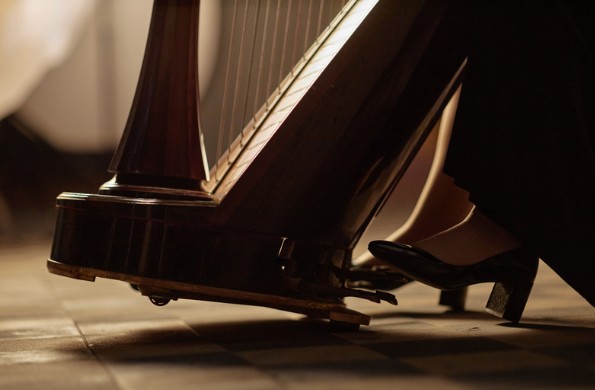
At Anderson, we’ve got a soft spot for pedal harps. Their craftsmanship and complexity, not to mention their unique sound, make them one of our personal favorites. It’s why we’re one of the few companies that offer such specialized musical instrument insurance for professionals and hobbyists or student harpists alike.
The average cost of a pedal harp ranges from $15,000 to $40,000, depending on the brand and model you choose. Even an entry-level instrument that’s suitable for students or semi-professionals can set you back more than $10,000, and if you’re a professional musician, it’s likely that the value of your concert harp — perhaps a handcrafted concert harp by a leading maker like Lyon & Healy, Salvi or Camac — easily exceeds $50,000. Add in custom features or gold leaf, and many top orchestral players own a pedal harp that tops $100,000 or more.
So, a pedal harp costs a lot. That’s the easy part of the insurance equation. The important question you should be asking your insurance partner is: “Do you understand why a pedal harp is so expensive?”
Why does this awareness and familiarity with the special qualities of a pedal harp matter? Because this specialized knowledge helps your insurance provider craft a comprehensive policy that covers the unique risks every pedal harpist faces. After all, if you don’t know the specifics of how a pedal harp is made and played, how can you possibly write an insurance policy that protects it?
Anderson has already written more than 3,000 policies specific to pedal harps, including specialized travel instrument insurance, instrument theft insurance, professional musical instrument insurance, orchestra policies, student policies and more, so we know the ins and outs of pedal harps, what drives their value, and the most common reasons they get damaged.
What makes them so expensive? Complex engineering, craftsmanship and high-quality materials. Your pedal harp, which stands over six feet tall and weighs around 80-90 pounds — is a handmade mechanical marvel with more than 2,000 individual parts. Just the pedal mechanism itself requires precise engineering to be able to change the pitch of the harp’s 47 strings by way of rods, discs and levers. Skilled artisans invest hundreds of hours assembling and voicing the instrument. When considering your harp’s value, don’t forget to add in the kind of tonewoods used as well — often maple, spruce or mahogany — that are seasoned and aged for better stability and resonance, or the gold leaf, inlays and other flourishes that add to your instrument’s beauty. These are just a few of the reasons a pedal harp is so much more expensive than most string instruments, especially those that are mass produced.
To be certain, pedal harps are one of the most elegant and complex musical instruments we insure, and we know they’re particularly vulnerable to damage due to their complexity. Physical or impact damage during transport and handling is especially prevalent. A pedal harp, when fully tensioned, is strung at about 2,000 lbs. of pressure per square inch. A fall or hard knock will likely crack the soundboard, damage the neck or lead to column warping, rendering your harp non-playable. String or mechanism damage can result from changes in temperature, humidity or rough handling. Rapid environmental changes during transport can be especially harmful to wood, causing shrinkage, cracking or swelling. Then there are catastrophic losses due to theft, fire or water damage.
We don’t need to convince you of the beauty of your pedal harp. We just hope you don’t need to be convinced to protect it with the right insurance. Homeowners’ policies simply aren’t enough — you need specialized musical insurance that’s tailored to pedal harps and covers accidental damage, theft, water, travel and other unique scenarios depending on your individual situation. If you’ve got any questions about agreed-value coverage, worldwide coverage, liability and accessory coverage or other policy details, we’re happy to share our insight any time. We’re also happy to geek out a bit about things only a pedal harpist might know, like the brilliance of Susann McDonald, the 2025 USA International Harp Competition winners or even Salvi’s new carbon-fiber-body version of the Delta.
Supporting sources for current pedal harp pricing
- “the average price of … a full size pedal harp is $15,000 to $20,000” Virginia Harp Center
- Virginia Harp Center also lists many new pedal harp models, for example: Camac Clio S at $13,950, Camac Égérie S at $16,500, Salvi Arianna at $55,000, etc. Virginia Harp Center
- new pedal harps are listed in the $13,000 to $33,000+ range (e.g. Camac Clio $13,950; Lyon & Healy Style 85CG $24,900; Camac Trianon 47 $32,900) at atlantaharpcenter.com
- harpconnection.com lists concert-grand pedal harps starting from ~$19,000 (depending on finish and options)
- oregonhumanities.org states:“the average full-size pedal harp ranges from $20,000 to $100,000.” oregonhumanities.org
- Dusty Strings (a harp maker / information site) notes that while they don’t build pedal harps themselves, they generally see pedal harps priced “upwards of $10,000” in the market. manufacturing.dustystrings.com
Related posts